Concrete Calculator
Calculate Concrete Volume Instantly
Concrete Calculator
In today’s time, for any construction project, it is important to estimate the amount of concrete required. For this purpose, we have created a tool called the Concrete Calculator. A Concrete Calculator is a tool through which you can estimate the concrete required for construction work. In the Concrete Calculator, whether you are building a slab, footing, column, or wall, you can calculate the concrete volume so that you get an accurate estimate of the required quantity and reduce material wastage. Instaup apk
Concrete Slab Calculator
Concrete Slab Calculator
A Concrete Slab Calculator is used to measure the amount of concrete required for any slab, patio, driveway, garage floor, or sidewalk, making it easier to estimate project costs accurately.
Concrete Slab Calculator
Calculate concrete volume, cubic yards, cubic feet, ready-mix trucks, concrete bags, and estimated project cost for residential and commercial slabs in the USA.
Calculation Results
Concrete Footing Calculator
A footing is the lowest part of any building structure. Its purpose is to distribute the structure's load evenly to the ground, ensuring that the building remains safe and stable.
Concrete Footing Calculator
Calculate concrete volume, cubic yards, concrete bags, ready-mix trucks, and estimated concrete cost for residential and commercial footing projects in the USA.
Calculation Results
The formula for calculating concrete footing is:
Length × Width × Depth ÷ 27 = Cubic Yards
Concrete Column Calculator
A Concrete Column Calculator is used to estimate the amount of concrete required for round or square columns. These columns transfer the load of a building, roof, beam, or other structures to the foundation.
Formula: π × r² × Height = Concrete Volume
Where:
- π (Pi) = 3.1416
- r = Radius
- Height = Total length of the column
Concrete Wall Calculator
Concrete Wall Calculator
A concrete wall is a wall made of concrete. A Concrete Wall Calculator is used to estimate the amount of concrete required for it.
Formula for calculating concrete volume:
Length × Width × Thickness ÷ 27 = Cubic Yards
Concrete Material Estimator – Cement, Sand & Aggregate Calculator
Concrete Material Estimator – Cement, Sand & Aggregate Calculator
A Concrete Material Estimator is used to accurately estimate the amount of cement, sand, and aggregate required for any project. Cement, sand, and aggregate are the primary materials needed to make concrete.
The standard concrete mix ratio is:
1 : 2 : 4
How to calculate yards of concrete
How to Calculate Concrete Yards
How Many Bags of Concrete in a Yard | 80lb, 60lb, 40lb Bags Calculator
How Many Bags of Concrete Do I Need
Concrete Cost Calculator Guide
Concrete Slab Thickness Guide (2026)
Concrete Footing Size Guide: Calculation, Types, Charts & Best Practices
Concrete Mix Ratio Explained: Types, PSI Chart & Best Mix Guide
Concrete Curing Time: How Long to Cure Concrete for Maximum Strength
Concrete Weight Calculator Guide: Formula, Density & Weight Chart
Ready Mix Concrete Cost (2026): Price Per Yard, Cost Breakdown & Calculator Guide
Concrete for 1000 Sq Ft House (2026): Cost, Quantity Calculator & Price Guide
Concrete Block Calculator Guide (2026): Calculate CMU Blocks Easily
Cement, Sand and Aggregate Calculator (2026) | Free Material Estimator
Concrete Wall Construction Guide (2026): Types, Design, Cost & Best Practices
Concrete Quantity Estimation Guide (2026): Formula, Calculations, Cost & Material Estimation
Frequently Asked Questions
How much concrete material is required for 100 cubic feet?
For 100 cubic feet, 18 bags of cement (50 kg), 44.00 cu ft of sand, and 88.00 cu ft of aggregate will be required.
What can happen if concrete is poured during the rain?
If concrete is poured during rain, contact with rainwater washes away the cement present in the mix, thereby reducing the concrete's strength.
How much does a yard of concrete cover?
One cubic yard of concrete covers approximately 81 square feet at a depth of 4 inches.
What is a concrete calculator?
A concrete calculator is a tool that helps estimate the amount of concrete required for slabs, footings, walls, columns, and other construction projects.
What is the difference between concrete and cement?
Cement is an ingredient used to make concrete. Concrete is a mixture of cement, sand, aggregate, and water.
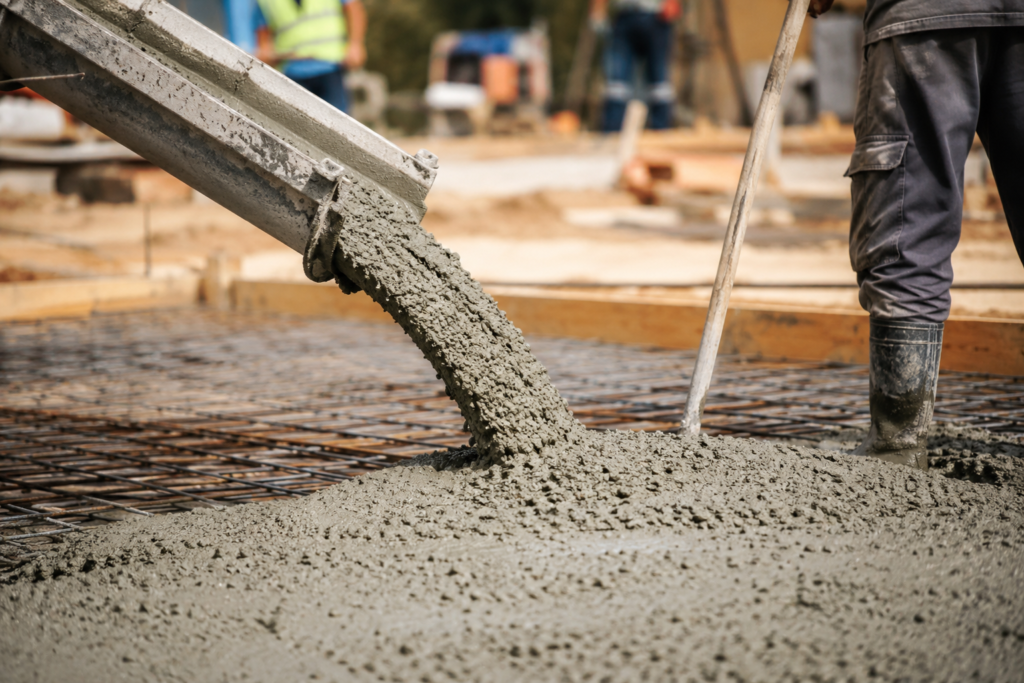
How to Calculate Concrete Quantity
To calculate the quantity of concrete, you need three measurements:
- Length
- Width
- Thickness/Depth
Using these, you can calculate the volume with the formula:
Length × Width × Thickness
Why Should You Use a Concrete Calculator?
Using a Concrete Calculator provides fast and accurate calculations. It allows you to instantly estimate concrete volume. The quantity of cement, sand, and aggregate can be calculated easily. It helps determine the correct concrete volume required, which can reduce material wastage.
How Do You Calculate a Concrete Slab?
To calculate the amount of concrete in a slab, use the following formula:
Length × Width × Thickness (in feet) ÷ 27 = Cubic Yards
Table of Contents
How Many Bags of Concrete Are in a Cubic Yard?
The number of concrete bags needed for 1 cubic yard (27 cubic feet) depends on the bag size and the yield of each bag.
| Bag Size | Approximate Bags Needed for 1 Cubic Yard |
|---|---|
| 40 lb bag | 80–81 bags |
| 50 lb bag | 64–65 bags |
| 60 lb bag | 53–54 bags |
| 80 lb bag | 40–45 bags |
What Is the Price of Concrete in 2026?
If we talk about ready-mix concrete in 2026, its price is generally around $160 to $195 per cubic yard, but in some places it can go up to $200+ per cubic yard. Concrete prices depend on location, PSI strength, delivery distance, order quantity, and other factors.
How Much Concrete Is Needed for a 1000 Square Foot House?
If a 4-inch thick concrete slab is required for a 1000 square foot house, the calculation is as follows:
Area = 1000 sq ft
Thickness = 4 inch = 0.333 ft
1000 × 0.333 ÷ 27 = 12.35 cubic yards
If 5% waste is added:
12.35 × 1.05 = 12.97 cubic yards
Approximately 13 cubic yards of concrete will be required.
If the ready-mix concrete price is considered $160–$195 per cubic yard, the total cost will be approximately $2,080–$2,535 (this is only the concrete cost; labor is not included).
Causes of Concrete Cracks and Prevention Measures
Concrete is a strong construction material, but cracks can sometimes develop in it. Small cracks may be normal, but larger cracks can affect the structural strength. Common types of concrete cracks include cracks caused by rapid drying, soil settlement, temperature changes, excessive load, design errors, and very thin surface cracks that are often not serious.
Causes of Cracks in Concrete
- Adding more water than necessary to the concrete mix reduces its strength. Once the excess water evaporates, cracks may develop.
- If concrete is not kept moist for a sufficient period, it dries and shrinks quickly, causing cracks to appear on the surface.
- Excessive heat or cold causes concrete to expand and contract, creating stress that results in cracks.
- An incorrect ratio of cement, sand, and aggregate can weaken the concrete and lead to cracks over time.
- If the soil beneath the concrete is not properly compacted, settlement can occur, causing cracks.
Methods to Prevent Cracks in Concrete
- Maintain the correct water-cement ratio and add only the required amount of water to the mix.
- Perform proper curing. Cure the concrete for 7 to 14 days after pouring.
- Use control joints.
- Use high-quality cement, sand, and aggregate.
- Compact the soil or base properly before pouring concrete.
- Pay special attention to curing during hot weather and protect concrete from freezing during cold weather.