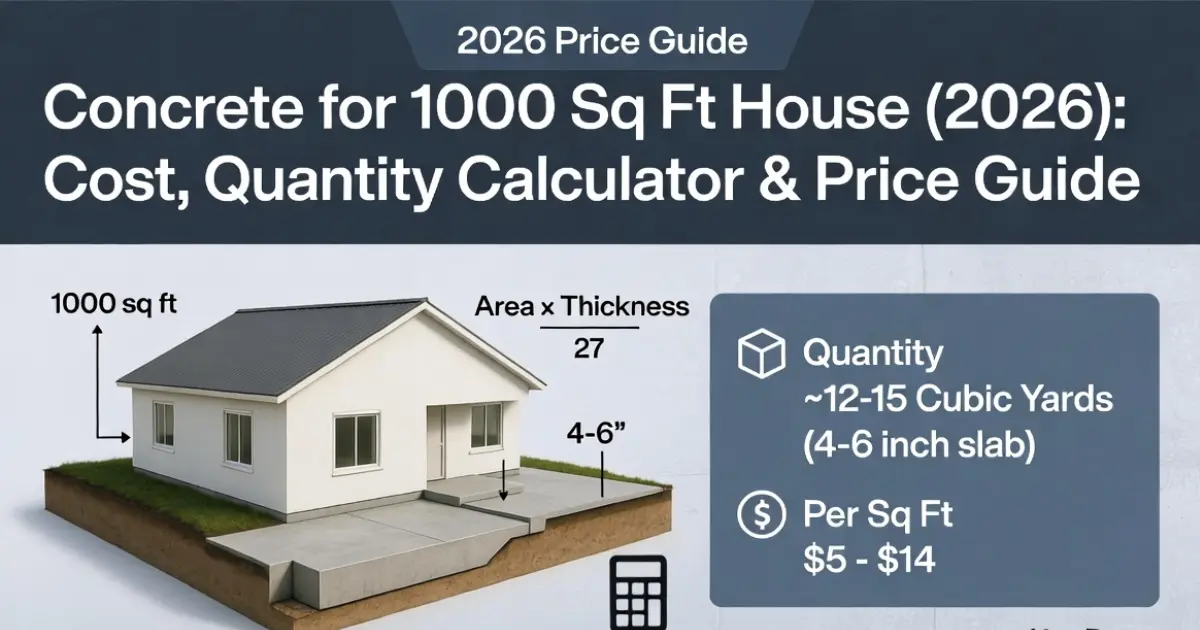
Concrete for 1000 Sq Ft House (2026): A 1000 sq ft house may look like a small or medium-sized home, but the amount and quality of concrete used in its construction have a major impact on the building’s strength, durability, and overall cost. Concrete forms the backbone of the home’s foundation, helping it safely support the weight of walls, floors, roofing, and everyday loads for decades. A properly designed concrete foundation also reduces the risk of settlement, cracking, moisture intrusion, and costly structural repairs in the future.
For most residential homes in the United States, a slab foundation is one of the most common and cost-effective foundation types. However, before starting construction, it is essential to estimate how much concrete will be required and how much it will cost. Accurate calculations help homeowners avoid material shortages, reduce waste, and stay within budget.
In this guide, you’ll learn everything you need to know about concrete for a 1000 sq ft house, including slab foundation concrete quantity calculations, estimated concrete costs, and the key factors that influence the final project price. We’ll also share practical tips to help you save money while maintaining structural quality. All cost estimates in this article are based on typical U.S. market prices for 2026.
Note: The actual amount of concrete and the total construction cost can vary significantly depending on your location, foundation design, slab thickness, local labor rates, building codes, and site-specific soil conditions. Always consult a licensed contractor or structural engineer for an accurate estimate before beginning your project.
Concrete Quantity Calculation for a 1000 Sq Ft House
Calculating the right amount of concrete is one of the most important steps before building a 1000 sq ft house. Ordering too little concrete can delay the project, while ordering too much increases material costs. In most cases, contractors also add a 10–15% waste allowance to account for uneven ground, spillage, over-excavation, and finishing losses. Concrete calculator
Concrete Quantity Formula
The standard formula for calculating concrete volume is:
Concrete (Cubic Yards) = Area (sq ft) × Thickness (ft) ÷ 27
Since 1 cubic yard = 27 cubic feet, divide the total concrete volume in cubic feet by 27 to determine the required cubic yards.
Example Calculation (1000 Sq Ft with a 4-Inch Slab)
- House Area: 1,000 sq ft
- Slab Thickness: 4 inches = 4 ÷ 12 = 0.333 ft
Calculation:
- 1,000 × (4 ÷ 12) = 333.33 cubic feet
- 333.33 ÷ 27 = 12.35 cubic yards
After adding a 10–15% waste allowance, you should order approximately 12–13 cubic yards of concrete for a standard 4-inch slab.
Concrete Quantity by Slab Thickness
| Slab Thickness | Estimated Concrete Required |
|---|---|
| 4 inches | 12–13 cubic yards |
| 5 inches | 15–16 cubic yards |
| 6 inches | 18–19 cubic yards |
Note: Thicker slabs are commonly used for garages, heavy-load areas, poor soil conditions, or where required by local building codes.
Concrete Quantity by Foundation Type
| Foundation Type | Estimated Concrete Requirement (1000 Sq Ft House) |
|---|---|
| Monolithic Slab | 12–13 cubic yards (4-inch slab with thickened edges) |
| Stem Wall Foundation | 15–20+ cubic yards, depending on wall height, footing size, and slab thickness |
| Crawl Space Foundation | Generally requires more concrete due to footings, foundation walls, and support piers |
| Basement Foundation | Highest concrete usage because of footings, foundation walls, and the basement floor slab |
Current Average Costs (2026) in 1000 Sq Ft House
The cost of concrete for a 1000 sq ft house depends on the foundation type, slab thickness, labor rates, material prices, and local construction costs. Across the United States, concrete prices have remained relatively stable in 2026, but regional differences can still affect the final project budget.
Average Installed Cost Per Square Foot
For a standard residential slab or foundation, the installed cost typically ranges between:
- $5–$14 per sq ft
- National average: $6–$10 per sq ft
This installed price generally includes:
- Site preparation
- Formwork
- Reinforcement
- Concrete placement
- Finishing
- Labor
Estimated Total Cost for a 1000 Sq Ft House
| Project Type | Estimated Cost (USD) |
|---|---|
| Basic Slab Foundation | $5,000–$14,000 |
| Average Residential Project | $6,500–$10,000+ |
| Premium or Complex Foundation | $10,000–$14,000+ |
Projects with thicker slabs, difficult soil conditions, or extensive reinforcement usually fall toward the higher end of the price range.
Ready-Mix Concrete Material Cost
If you’re calculating material only, ready-mix concrete in 2026 generally costs:
- $125–$195 per cubic yard
A typical 1000 sq ft, 4-inch slab requires approximately 12–13 cubic yards of concrete, resulting in an estimated material cost of:
- Approximately $1,600–$2,500
- Delivery charges are usually extra and vary by supplier, distance, and order size.
Full Installed Cost vs. Material Cost
Remember that ready-mix concrete is only one part of the total project cost. The full installed price is significantly higher because it also includes:
- Site preparation and grading
- Excavation and sub-base installation
- Formwork and edge preparation
- Rebar or wire mesh reinforcement
- Concrete pouring and finishing
- Equipment, labor, and cleanup
- Permit and inspection costs (where applicable)
As a result, while the concrete material itself may cost around $1,600–$2,500, the fully installed foundation for a 1000 sq ft house typically ranges from $5,000 to over $14,000, depending on project complexity, location, slab thickness, and local labor rates.
Cost Breakdown
The total cost of concrete for a 1000 sq ft house includes much more than just ready-mix concrete. Expenses such as site preparation, labor, reinforcement, and additional construction materials can significantly increase the final price. Understanding each cost component helps homeowners create a more accurate construction budget.
1. Concrete Material (30–40% of Total Cost)
Ready-mix concrete typically accounts for 30–40% of the total foundation cost.
- Average price: $125–$195 per cubic yard
- Typical requirement (4-inch slab): 12–13 cubic yards
- Estimated material cost: $1,600–$2,500
The final amount depends on slab thickness, concrete strength (PSI), delivery distance, and local supplier pricing.
2. Site Preparation & Excavation
Before concrete is poured, the construction site must be properly prepared.
Typical cost:
- $1–$3 per sq ft
This usually includes:
- Land clearing and grading
- Excavation
- Gravel or crushed stone base
- Soil compaction
- Soil testing (if required)
- Drainage preparation
Poor soil conditions or sloped lots can increase preparation costs.
3. Labor (Forming, Pouring & Finishing)
Labor is often one of the largest project expenses.
Typical cost:
- $2–$8 per sq ft
Labor charges generally cover:
- Building concrete forms
- Installing reinforcement
- Pouring ready-mix concrete
- Leveling and screeding
- Floating, edging, and finishing
- Initial curing work
Labor costs vary depending on location, contractor experience, and project complexity.
4. Reinforcement
Steel reinforcement improves the slab’s strength and helps reduce cracking.
Typical cost:
- $0.70–$2.00+ per sq ft
Common reinforcement options include:
- Wire mesh – Suitable for standard residential slabs.
- Rebar (reinforcing steel) – Recommended for heavier loads, expansive soils, or engineered foundations.
5. Additional Costs
Several additional components may be required depending on local building codes and foundation design.
| Additional Item | Typical Purpose |
|---|---|
| Vapor Barrier | Protects the slab from ground moisture |
| Rigid Insulation | Improves energy efficiency in colder climates |
| Plumbing Under Slab | Water supply and drain lines installed before pouring |
| Concrete Pump | Needed when direct truck access is limited |
| Building Permits & Inspections | Required by most local municipalities |
These items can add several hundred to several thousand dollars to the total project cost.
Effect of Slab Thickness & Concrete Additives
Upgrading the slab from 4 inches to 6 inches increases both the concrete quantity and overall project cost.
- A 4-inch slab typically requires 12–13 cubic yards of concrete.
- A 6-inch slab may require 18–19+ cubic yards, increasing both material and labor expenses.
Concrete additives can also affect pricing. Common options include:
- Fiber reinforcement – Reduces shrinkage cracking.
- Air-entraining admixtures – Improve freeze-thaw durability.
- Accelerators – Speed up curing in cold weather.
- Water reducers or plasticizers – Improve workability without adding excess water.
While these upgrades increase the initial cost, they often improve the slab’s strength, durability, and long-term performance, reducing future maintenance and repair expenses.
Foundation Type Comparison for a 1000 Sq Ft House
Choosing the right foundation type is one of the biggest factors affecting the total concrete cost of a 1000 sq ft house. Each foundation has different construction requirements, concrete quantities, labor costs, and long-term benefits. While a monolithic slab is the most affordable and commonly used option in many parts of the United States, crawl spaces and basements require more materials and labor, making them significantly more expensive.
Estimated Foundation Costs for a 1000 Sq Ft House (U.S. – 2026)
| Foundation Type | Average Installed Cost (Per Sq Ft) | Estimated Total Cost (1000 Sq Ft) | Best For |
|---|---|---|---|
| Monolithic Slab | $5–$14 | $5,000–$14,000 | Most affordable, fastest construction, warm climates |
| Crawl Space | $8–$18 | $8,000–$18,000 | Better ventilation and easy access to plumbing and utilities |
| Basement (Unfinished) | $20–$50+ | $20,000–$50,000+ | Extra storage or future living space, cold climates |
Quick Comparison
| Feature | Monolithic Slab | Crawl Space | Basement |
|---|---|---|---|
| Initial Cost | ⭐ Lowest | Moderate | Highest |
| Concrete Requirement | Low | Medium | High |
| Construction Time | Fast | Moderate | Long |
| Maintenance Access | Limited | Easy | Excellent |
| Storage Space | None | Limited | Large |
| Best Climate | Warm & Moderate | Mixed | Cold Regions |
Which Foundation Offers the Best Value?
Monolithic Slab
The most common and cost-effective foundation, typically costing $5–$14 per sq ft. It is ideal for homeowners looking to minimize construction costs while maintaining a durable foundation.
Crawl Space
Costs more than a slab but provides convenient access to plumbing, electrical, and HVAC systems, making future maintenance easier.
Basement
The most expensive option because it requires deeper excavation, additional foundation walls, waterproofing, and more concrete. However, it adds valuable storage space and can increase a home’s usable square footage.
Factors Affecting Cost
The cost of concrete for a 1000 sq ft house can vary significantly from one project to another. While the national average provides a good starting point, the final price depends on factors such as location, soil conditions, foundation design, labor rates, and optional upgrades. Understanding these variables will help you prepare a more realistic construction budget.
1. Location
Where you build your home has a major impact on the total foundation cost.
- High-cost states such as California (CA) and New York (NY) can be 20–50% more expensive due to higher labor rates, stricter building codes, and increased material prices.
- In many Southern and Midwestern states, labor and material costs are generally lower, making concrete foundations more affordable.
2. Soil & Site Conditions
The condition of your building site directly affects excavation and foundation costs.
Common factors include:
- Poor or unstable soil requiring additional engineering
- Sloped lots that need extra excavation and grading
- Flood-prone areas requiring stronger or elevated foundations
- High groundwater levels that may require drainage systems
These conditions can increase both material usage and labor costs.
3. Design Choices
The foundation design you choose also influences the total project cost.
Examples include:
- Slab thickness (4-inch vs. 6-inch)
- Higher-strength concrete mix
- Wire mesh or rebar reinforcement
- Decorative or stamped concrete finishes
- Engineered foundation designs for heavy loads
More complex designs require additional concrete, reinforcement, and labor.
4. Regional & Seasonal Variations
Construction costs change throughout the year and across different regions.
Factors include:
- Local labor rates
- Ready-mix concrete prices
- Fuel and transportation costs
- Material availability
- Weather conditions that affect scheduling and curing
Projects completed during peak construction seasons may cost more because of higher contractor demand.
5. Additional Concrete Features
Many homeowners install extra concrete structures along with the house foundation, increasing the total project budget.
These may include:
- Garage slab
- Driveway
- Sidewalks and walkways
- Front porch or patio
- Steps and exterior landings
Each additional feature requires extra concrete, reinforcement, finishing, and labor.
Cost Impact Summary
| Cost Factor | Effect on Total Cost |
|---|---|
| Location | High-cost states (CA, NY) can increase costs by 20–50%. |
| Soil & Site Conditions | Poor soil, slopes, or flood zones increase engineering and excavation costs. |
| Foundation Design | Thicker slabs, stronger concrete, and extra reinforcement increase material and labor costs. |
| Regional & Seasonal Changes | Labor rates, material prices, and weather conditions influence project pricing. |
| Additional Concrete Work | Garages, driveways, sidewalks, patios, and porches increase total concrete requirements and installation costs. |
Planning for these factors before construction begins can help prevent unexpected expenses and ensure your 1000 sq ft house foundation stays within budget while meeting local building code requirements.
Additional Concrete Uses in a 1000 Sq Ft House
Many homeowners focus only on the main foundation slab, but a complete 1000 sq ft house project often requires concrete in several other areas as well. Driveways, garage slabs, walkways, patios, and even interior floors can significantly increase the total amount of concrete needed and the overall project cost.
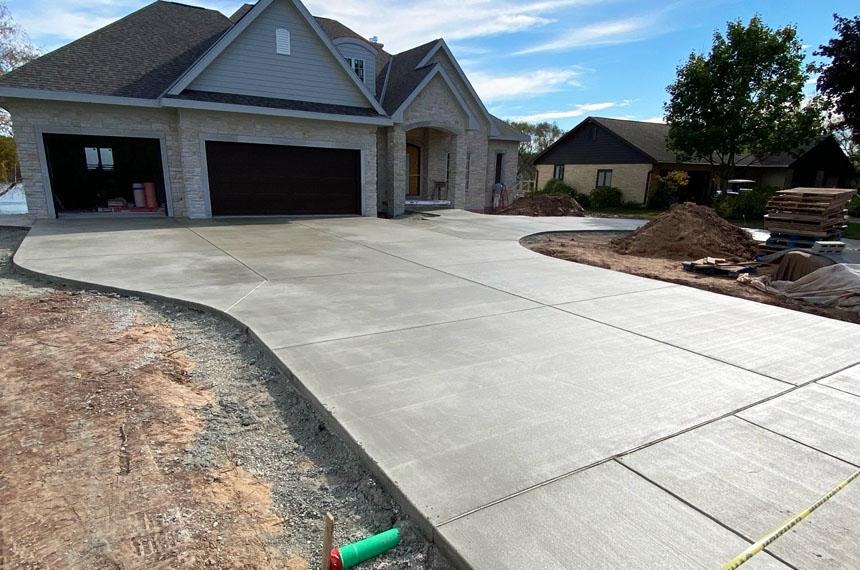
1. Driveway & Garage Slab
A typical residential driveway or attached garage can add a substantial amount of concrete to the project.
Common Additional Area
| Structure | Typical Size |
|---|---|
| Single-Car Garage | 240–300 sq ft |
| Double-Car Garage | 400–500 sq ft |
| Driveway | 300–800 sq ft (depending on length and width) |
| Combined Garage + Driveway | 400–800+ sq ft of additional concrete area |
2. Interior Concrete Floors
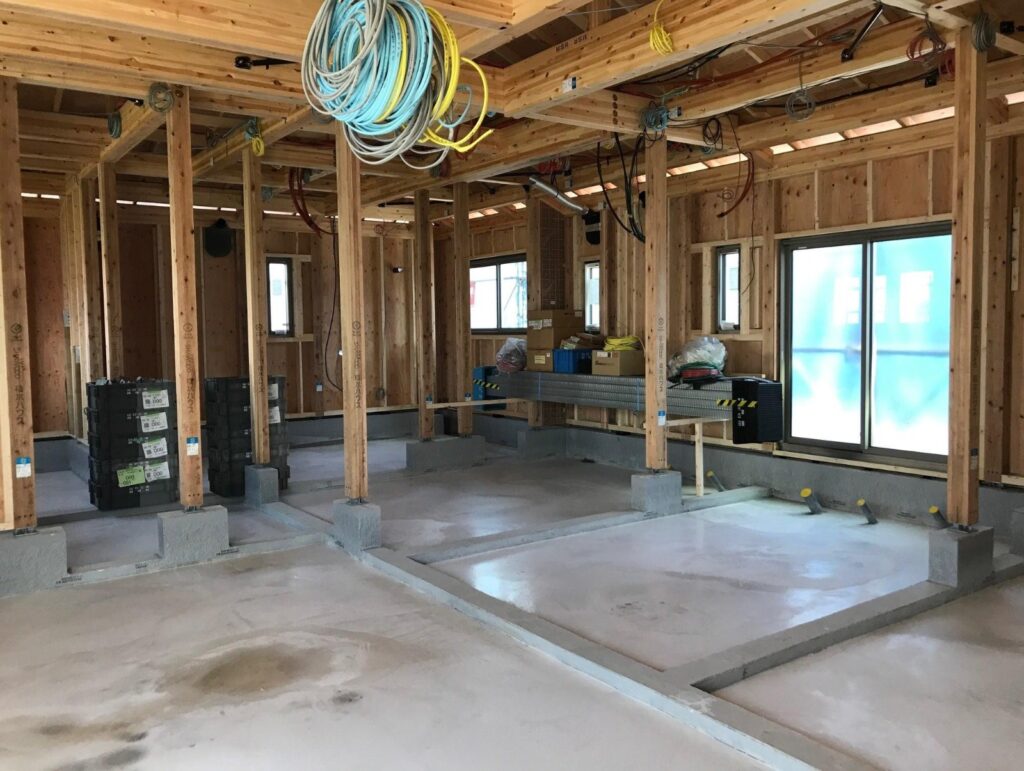
If the home uses a slab-on-grade foundation, the concrete foundation itself also serves as the interior floor base. However, if the house is built on a crawl space or basement foundation, additional concrete may be needed for:
- Basement floor slab
- Utility room floors
- Storage areas
- Mechanical rooms
3. Walkways & Patios
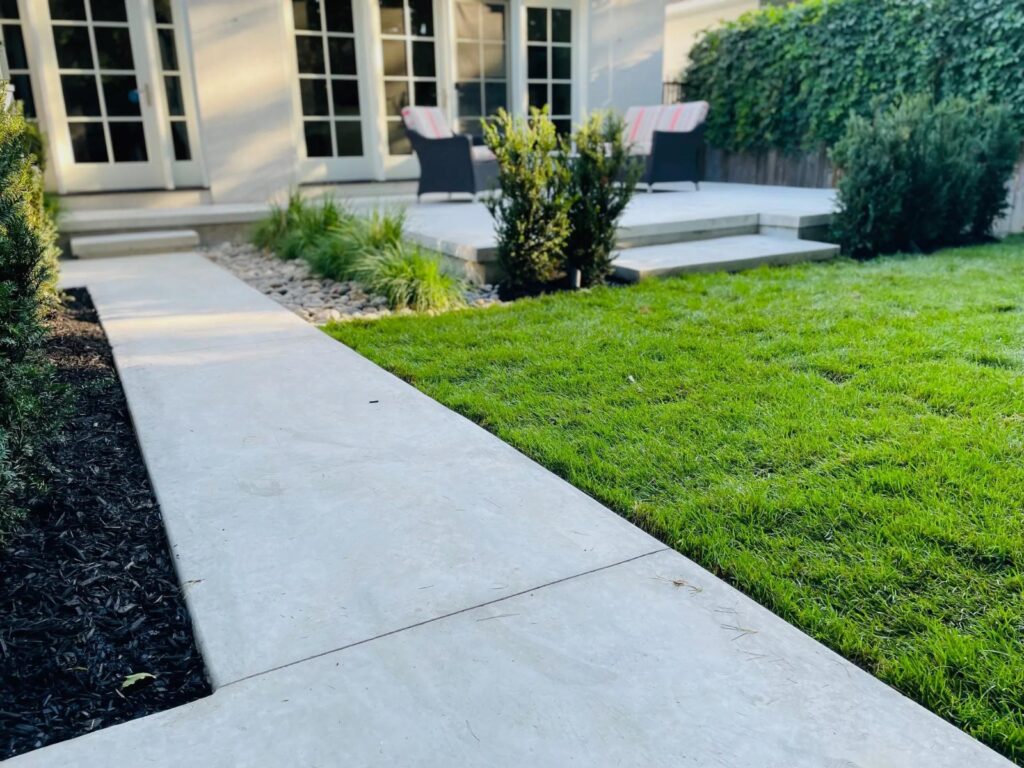
Exterior concrete features are very common in residential projects.
Typical Sizes
| Feature | Typical Size |
|---|---|
| Front Walkway | 40–80 sq ft |
| Sidewalks Around the House | 50–150 sq ft |
| Back Patio | 100–300 sq ft |
| Porch Slab | 50–150 sq ft |
Estimated Total Concrete for a Complete 1000 Sq Ft House
Here is a practical estimate for a typical residential project.
Concrete Area
| Area | Approx. Size |
|---|---|
| Main House Slab | 1,000 sq ft |
| Garage Slab | 400 sq ft |
| Driveway | 400 sq ft |
| Walkways | 80 sq ft |
| Patio | 150 sq ft |
| Total | ~2,030 sq ft |
Total Concrete Volume Estimate
Assuming a 4-inch slab thickness for most flatwork:
| Area | Estimated Concrete |
|---|---|
| Main House Slab | ~12–13 yd³ |
| Garage Slab | ~5 yd³ |
| Driveway | ~5 yd³ |
| Walkways & Patio | ~2–3 yd³ |
| Total | ~24–26 yd³ |
Approximate total concrete required for a complete property: 25 cubic yards
Quick Summary
- Main 1000 sq ft slab: ~12–13 cubic yards
- Garage + driveway: ~10 cubic yards
- Walkways & patio: ~2–3 cubic yards
- Complete property estimate: ~24–26 cubic yards of concrete
For budgeting purposes in the United States (2026), many homeowners find that the additional concrete outside the house can nearly double the amount of concrete required compared to the foundation slab alone.
Tips to Reduce Concrete Cost for a 1000 Sq Ft House
Building a 1000 sq ft house doesn’t always mean spending more on concrete. With proper planning and smart decisions, you can reduce construction costs without compromising the strength or durability of the foundation. The following tips can help you stay within budget while ensuring a high-quality concrete installation.
1. Calculate Concrete Quantity Accurately
Ordering the correct amount of concrete is one of the easiest ways to save money.
- Measure the slab dimensions carefully.
- Use the correct slab thickness when calculating volume.
- Add only a 10–15% waste allowance to account for minor losses.
- Avoid over-ordering, which increases material costs and waste.
2. Compare Multiple Contractor Quotes
Don’t hire the first contractor you contact.
- Request quotes from at least 3–5 licensed contractors.
- Compare labor charges, project scope, warranties, and included services.
- Choose a contractor based on overall value—not just the lowest price.
Competitive bidding can often save thousands of dollars on a foundation project.
3. Use a Standard 4-Inch Slab with Proper Reinforcement
For most residential homes, a 4-inch slab is sufficient when designed according to local building codes.
- Avoid increasing slab thickness unless structurally necessary.
- Use appropriate wire mesh or rebar reinforcement for long-term durability.
- Follow the recommendations of your structural engineer or local building authority.
A properly reinforced 4-inch slab often provides the best balance between cost and performance.
4. Schedule Construction During the Off-Season
Construction costs often increase during peak building seasons.
If possible:
- Schedule the project during slower construction months.
- Contractors may offer better pricing when demand is lower.
- Material availability is often better, helping avoid delays and premium pricing.
5. Choose a Local Ready-Mix Supplier
Transportation is an important part of concrete pricing.
Working with a nearby ready-mix supplier can help:
- Reduce delivery charges
- Lower fuel and travel costs
- Ensure fresher concrete with shorter delivery times
- Improve scheduling and reduce waiting time on-site
6. Apply Value Engineering
Value engineering means eliminating unnecessary expenses while maintaining structural performance.
Examples include:
- Avoid decorative concrete finishes unless desired.
- Use the foundation type best suited to your site and budget.
- Build only the slab thickness required by design.
- Skip unnecessary upgrades or premium concrete mixes if they are not needed.
- Optimize the foundation layout to reduce material usage.
Cost-Saving Checklist
| Money-Saving Tip | Benefit |
|---|---|
| Accurate quantity calculation | Reduces material waste and unnecessary purchases |
| Compare multiple contractor quotes | Helps secure the best overall price |
| Standard 4-inch slab with proper reinforcement | Balances durability and affordability |
| Off-season construction | May lower labor and scheduling costs |
| Choose a local ready-mix supplier | Reduces delivery and transportation expenses |
| Apply value engineering | Eliminates unnecessary features while maintaining structural quality |
By following these practical strategies, homeowners can significantly reduce the overall concrete cost for a 1000 sq ft house while ensuring a strong, durable, and code-compliant foundation.
Frequently Asked Questions (FAQs)
How much concrete do I need for a 1000 sq ft house?
A standard 1000 sq ft house with a 4-inch slab typically requires about 12–13 cubic yards of concrete, including a 10–15% waste allowance.
How much does concrete cost for a 1000 sq ft house in 2026?
In the United States, the fully installed concrete foundation for a 1000 sq ft house generally costs $5,000–$14,000, depending on location, slab thickness, labor, and foundation type.
What is the ready-mix concrete cost for a 1000 sq ft slab?
A 4-inch slab usually needs 12–13 cubic yards of ready-mix concrete. At $125–$195 per cubic yard, the material cost is approximately $1,600–$2,500, excluding delivery charges.
How many cubic yards of concrete are needed for a 6-inch slab?
A 1000 sq ft house with a 6-inch slab typically requires about 18–19 cubic yards of concrete before accounting for any additional waste.